

venerdì 30 maggio 2014


lunedì 26 maggio 2014
yes yes NO AMERICANS NO EUROPEANS ASIA & AFRICA for freedom.

May 25, 2014 (KIGALI) - The African Development Bank (AfDB) and China have sealed a $2 billion co-financing fund, which seeks to mobilise resources to enhance development within Africa.
Under the 10-year Africa Growing Together Fund (AGTF) project, resource will reportedly be provided and used alongside the AfDB’s own reserves to finance eligible sovereign and non-sovereign guaranteed development projects.
“The AGTF marks an important milestone in the long-standing relationship between China and the African Development Bank Group in particular and Africa in general”, said Donald Kaberuka, the president of AfDB Group in the Rwandan capital, Kigali.
He added, “The AGTF will operate within the strategic framework, policies and procedures of the AfDB, including its integrated safeguards, thereby leveraging on the AfDB’s strengths”.
The AGTF will be immediately established, and is expected to be used to co-finance some projects before the end of this year.
Zhou Xiaochuan, Governor of the People’s Bank of China, acknowledged the AfDB’s work over the last 50 years, and the great strides it has made in promoting growth and alleviating poverty.
“The AfDB’s rich experience, convening power and strong results-oriented culture made the Bank China’s ideal partner for channeling resources in support of long-term growth and development on the continent”, Xiaochuan remarked.
Meanwhile, the AfDB’s chief finance officer said the AGTF will enable an additional $200 million in more or larger-sized projects annually throughout Africa, on identical terms and conditions as for loans made by the AfDB itself to the same projects.
“This builds on the success of similar instruments such as the Nigeria Trust Fund, which has been in operation for close to 40 years”, remarked Charles Boamah.
“We hope that this model will be replicated with many more regional as well as non-regional member countries of the AfDB”, added Boamah.
venerdì 16 maggio 2014
Libertà di culto....non gratità del Bashir.
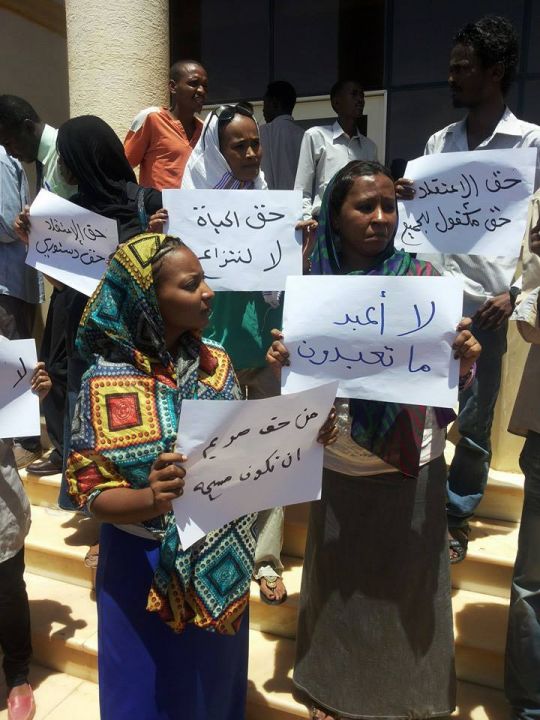
Mary non aveva commesso un reatto...
2014/05/16 07:42
Fonti giudiziarie ha detto Giovedi che il giudice ha chiesto alla sudanese Maria Yehia Ibrahim annullare la conversione al cristianesimo e tornare all'islam . Si attirò anche accusato di adulterio per il suo matrimonio con un uomo cristiano .
Le fonti hanno aggiunto che il giudice Abbas Califfo chiesto a Maria se essi tornare all'Islam . Ha detto , "Io sono un cristiano " regola promulgata con la pena di morte .
Un portavoce del ministero sudanese degli Affari Esteri Abu Bakr Siddiq La sentenza potrebbe riprendere in un tribunale superiore .
Il portavoce ha aggiunto che il Sudan si è impegnata a tutti i diritti umani e la libertà di credo è garantita in Sudan sotto la Costituzione e la legge . Ha detto che il Ministero degli Affari Esteri e la fiducia nella integrità e l'indipendenza del potere giudiziario .
E che trasportava circa 50 persone al di fuori le bandiere di corte che chiedevano libertà di religione , mentre alcuni hanno celebrato la sentenza islamisti canto , cantando " Allahu Akbar "
giovedì 15 maggio 2014
Machar ....

May 14, 2014 (ADDIS ABABA) – The opposition faction of the Sudan People’s Liberation Movement/Army (SPLM/A-In-Opposition) led by the former vice president Riek Machar is preparing its positions to be submitted to the regional mediation, a rebels spokesperson has revealed.
“On our side, the leadership has already formed 9 working committees to work out our positions based on a democratic federal presidential system of governance and to facilitate the work of our negotiations delegation,” Machar’s spokesperson, James Gatdet Dak, told Sudan Tribune when contacted on Wednesday.
Dak further explained that the 9 committees shall work out their positions on issues of federal system of governance, legislature, judicial and legal reform, security sector reform, economy, constitution, public services reform, national reconciliation and healing as well as census and elections, among others.
Since the start of Intergovernmental Authority on Development (IGAD) brokered talks to end the South Sudanese conflict, the rebels have demanded the restructure of the state on the basis of a new peace agreement and a federal constitution.
On 9 May, president Kiir and rebel leader Machar signed a roadmap agreement in the Ethiopian capital, Addis Ababa, which shall guide further negotiations between their delegations.
Dak went to say that the government delegation is not willing to espouse the spirit of reforms, but only react to the positions submitted by the opposition group.
“The regime’s delegation seems to be comfortable with the status quo in the country and would not want to volunteer in initiating a better system of governance in order to change the situation. They tell us we are the aggrieved party and they would therefore only respond to our submitted positions,” Dak further explained.
The working out of positions by the rebel group, he said, was “inclusive and participatory” as individuals or SPLM chapters in the Diaspora that pay their allegiance to the SPLM/A (in opposition) were also asked to deliberate on these issues and send in their contributions to the secretariat in Addis Ababa.
He added that after the opposition group will submit its positions to IGAD in the next few days, talks may adjourn until the government delegation has prepared its responses.
On the recent statement by president Salva Kiir postponing the upcoming elections from 2015 to 2018, Dak said the opposition group “believes that a timeframe for conduct of elections and who to oversee it would only be agreed upon during the negotiations between the two warring parties with involvement of other South Sudanese stakeholders”.
It is “not a prerogative of one side to decide it singlehandedly”, he said.
Earlier after his return to Juba from Addis Ababa, president Kiir announced that the 2015 elections will be delayed until 2017 or 2018 in order to give ample time to implement the outcome of the ongoing peace talks with the rebels.
Fighting erupted in mid-December in the national capital, Juba, and spread to other states when president Kiir allegedly ordered the commander of the presidential guards unit to disarm, among the guards, soldiers belonging to Machar’s Nuer ethnic group.
The president accused his former deputy of allegedly planning a coup as heated debates within the ruling SPLM party between Kiir’s group and Machar’s reformists were ongoing.
Machar dismissed the allegations of attempted coup and counter-accused the president of orchestrating the violence using the false coup attempt in order to get rid of the reformists who challenged his “dictatorial tendencies.”
He also accused the president of overseeing the massacre of over 10,000 members of the Nuer ethnic group which was the first ethnically targeted killings that later on spread in revenge killings in other states.
The United Nations has estimated tens of thousands of people lost their lives and over a million more displaced as a result of the violence.
The two sides have engaged in the peace talks in Addis Ababa for the last four months to try and resolve the conflict.
(ST)
sabato 10 maggio 2014
Bob's LEGACY.

LONDON - It is 35 years since the Grammy-winning musician Ziggy Marley started following in the footsteps of his famous father Bob. The eclectic style on his new album "Fly Rasta" shows that at 45, Marley is now keen to forge his own path.
“I wanted to create what I call ‘epic reggae’, with a little futuristic tinge to it,” Marley said, speaking to Reuters ahead of a headline show in London. “I wanted to do it with a standard of quality that is not compromised in any way.”
He only breaks reggae tradition on the album's lead single, “I Don’t Want to Live on Mars”, where his distinctive vocal is placed over a rock-influenced pop production.
Other parts of the release are classic, upbeat reggae, making it clear that representing his father comes naturally to Marley's first born. “I am his son and we share a certain way of life; the foundation of Rasta. We share a philosophy of what this music is,” he said.
However, he admits to being conservative when it comes to the business of being a Marley. As an independent artist on his own label, Tuff Gong Worldwide, he says he is more concerned with making an impact with his music than making money.
“We’re lucky because my father left us with some money and we can sustain. But we still have to pay bills; we still have to work, obviously. We grew up with a mindset that money wasn’t the first, primary thing and that is what makes our music different.”
It is also the reason why he has mixed views about how his father’s legacy has been handled in the past.
“The business side of it is something we have to be very careful with; the profiting off of his name and likeness and things like that,” he said.
“There’s a fine balance with me and the rest of the family who might have other ideas or another way of thinking about it.”
Marley is focussed on developing his own projects to keep his father’s name alive – and this includes a follow-up to his pro-environmental graphic novel "Marijuanaman", selling organic hemp products and producing other artists through his label.
“(My father) was an entrepreneur, he was a businessman – but a conscious one. Again, it wasn’t money, money, money – things have to be done for the right reasons and the right purposes, so we have to continue that legacy in that entrepreneurship way.”
Here are some other comments:
Q: Are their disadvantages to being a Marley?
A: Everything comes with a positive and a negative. If people don’t like you or didn’t like you, it’s worse that your name is Marley (laughs). With the name Marley, they say, “Well because you’re a Marley you won a Grammy” and it becomes that thing. But most of all, really, it’s love. That’s the greatest advantage that being a so-called Marley gives us, based upon what my father has done (and what) my mother has done. People give a lot of love.
Q: In the past, you’ve done albums specifically for children. Why does reggae music appeal to them?
A: It's really frustrating speaking to adults through music every time because adults' minds are usually made up; they’re usually set in their ways. So the philosophy is speak to children too, because children's' minds are open. For the next generation, there must be something that changes, that makes the world a better place. So children are a real deal. You have to speak to children.
Q: You support the legalization of marijuana in California, where you live. Why?
A: I just support the plant in all its aspects. Marijuana side is one thing, smoking, medical, recreational. But then there’s the hemp side of it, which is industrial, biofuel and nutrition. It’s an environmentally friendly way to make products. (Plus) we don't drink alcohol, we’re not like some guys who, when they have a hard day, they can go and get a pint. I don’t drink pints. So what does the earth have for me? What can the planet give me? I don’t do hops so the planet must have something for me too!
Q: It would have been your father’s 70th birthday next year – do you have plans to celebrate it?
A: We never grew up with a big celebration of birthdays because it’s kind of selfish. I guess we grew up in such a way. So for the 70th we might do something musical for the people. But personally? I just give thanks every day.
By Reuters, 14 hours 31 minutes ago
venerdì 9 maggio 2014
Peace talks should starts soon.
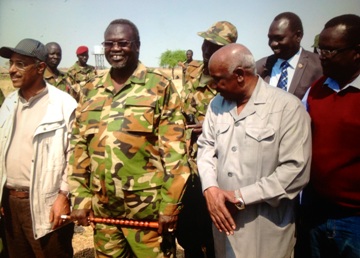
NEWS FRIDAY 9 MAY 2014
S. Sudan rebel leader arrives in Ethiopia for direct talks with Kiir
By Tesfa-Alem Tekle
May 8, 2014 (ADDIS ABABA/JUBA) – South Sudan rebel leader, Riek Machar arrived Thursday evening in the Ethiopian capital, Addis Ababa for Friday’s face-to-face talks with president Salva Kiir.
Speaking to Sudan Tribune from Bole international airport, spokesperson of the SPLM/SPLA in opposition, Mabior Garang confirmed that Machar arrived at about 8pm (local time).
The two rival leaders will hold direct talks on Friday, their first meeting since fighting in South Sudan broke out in mid-December last year between the two warring faction.
The agenda of the meeting remains unclear. However, Ethiopia government sources said immediate end of the violence, forming a transitional government and power sharing will be center of discussions.
Also, multiple government officials, including foreign diplomats in Juba claimed the talks would include an outline for an inclusive transitional government in the country
The South Sudanese president was due to travel to the Ethiopian capital on Friday.
Ethiopia’s foreign ministry spokesperson, Ambassador Dina Mufti later told Sudan Tribune that president Kiir would arrive for direct talks in Addis Ababa on Friday.
Kiir and Machar agreed to meet after a visit by the United States Secretary of State, John Kerry to Juba last week. Kerry also had a telephone conversation with Machar.
Both leaders also received an official invitation from the Ethiopian prime minister and IGAD chairperson Hailemariam Desalegn. The two rival leaders are expected to hold consultation meetings with Desalegn, prior to the direct talks.
The conflict in the world’s newest nation erupted on December 15 when President Kiir accused Machar of staging a coup, an accusation the latter denies.
Violence has left tens of thousands of people killed and forced more than 1.3 million to flee their homes.
Both sides are being accused of committing war crimes and atrocities in many parts of the country. The United Nations on Wednesday said crimes against humanity were likely committed by the two rivals.
The rebel and government delegations have been under IGAD-led negotiations since January. However, the two sides have so far failed to make a major breakthrough to end the violence.
(ST)
• Amnesty uncovers “horrific atrocities” in S. Sudan conflict
• S. Sudan split over US sanctions on top rival military officers
• South Sudan’s rival leaders to meet on Friday in Addis Ababa
martedì 6 maggio 2014
Tractors not armament.

NEWS TUESDAY 6 MAY 2014
Two Iranian navy warships dock in Port Sudan: SAF
May 5, 2014 (KHARTOUM) – The Sudanese Armed Forces (SAF) has announced that two Iranian navy warships docked at Port Sudan in a routine stop that will last for three or four days.
SAF’s spokesperson, Col. al-Sawarmi Khalid Saad, said the Sudanese Naval Forces (SNF) received the vessels on Monday at Sudan’s sea port, noting one of them is a frigate and the other is a supply ship.
“The two ships docked at Port Sudan for refueling and exchange of information with the SNF and they will continue sailing because Sudan is not their main destination but a transit point,” he said.
He pointed that ordinary citizens will be allowed to tour the two ships within the framework of the social contacts and in accordance with the schedule provided by the Iranian authorities which oversee visiting warships.
Since 2012, Port Sudan has become a regular stop for Iranian warships drawing concern by the US and its allies in the Gulf. Khartoum insists that its relations with Iran are based on common interests and not intended to threaten the interests of the Arab Gulf states.
Iran says that In line with international efforts to combat piracy its Navy has been conducting anti-piracy patrols in the Gulf of Aden since November 2008 to safeguard the vessels involved in maritime trade, especially the ships and oil tankers owned or leased by Tehran.
Israel also accuses Sudan of serving as a hub for weapons coming from Iran that are sent to Palestinian militants.
Last March, Israeli navy commandos seized a ship in the Red Sea off the Sudanese coast that was allegedly hiding Syrian-made M-302 surface-to-surface missiles supplied by Iran.
Over the past few years there have been mounting signs of deterioration in relations between Khartoum and Riyadh.
Last March, Sudan’s state minister at the foreign ministry, Kamal Ismail, admitted that there are tensions in Khartoum’s relations with some “friendly” countries, but stressed that this only a temporary situation.
Although the Sudanese official did not name the countries, he was likely referring to Saudi Arabia.
Saudi Arabian banks have also reportedly suspended their dealings with Sudan as of late February.
Last year, Saudi Arabia closed its airspace to the plane carrying Sudanese president Omer Hassan al-Bashir on his way to Iran where he was scheduled to attend the inauguration ceremony of president-elect Hassan Rouhani, thus forcing him and his delegation to return home.
Observers speculated that Sudan’s growing ties with Iran could have irked the Saudis, prompting them to block Bashir’s flight.
The mostly Sunni Muslim Arab Gulf states are wary of Iranian influence in the Middle East, fearing the Shiite-led country is seeking regional dominance that will stir sectarian tensions.
The Syrian conflict has also increased the divide between the two sides, with Arab monarchies supporting the rebels and Iran backing the Al-Assad regime.
Bashir, who performed the Muslim Hajj (pilgrimage) last year, did not meet with King Abdullah bin Abdulaziz during the visit, despite the Saudi monarch holding separate talks with the Turkish and Pakistani presidents who also performed Hajj at the time.
(ST)
Iscriviti a:
Post (Atom)